


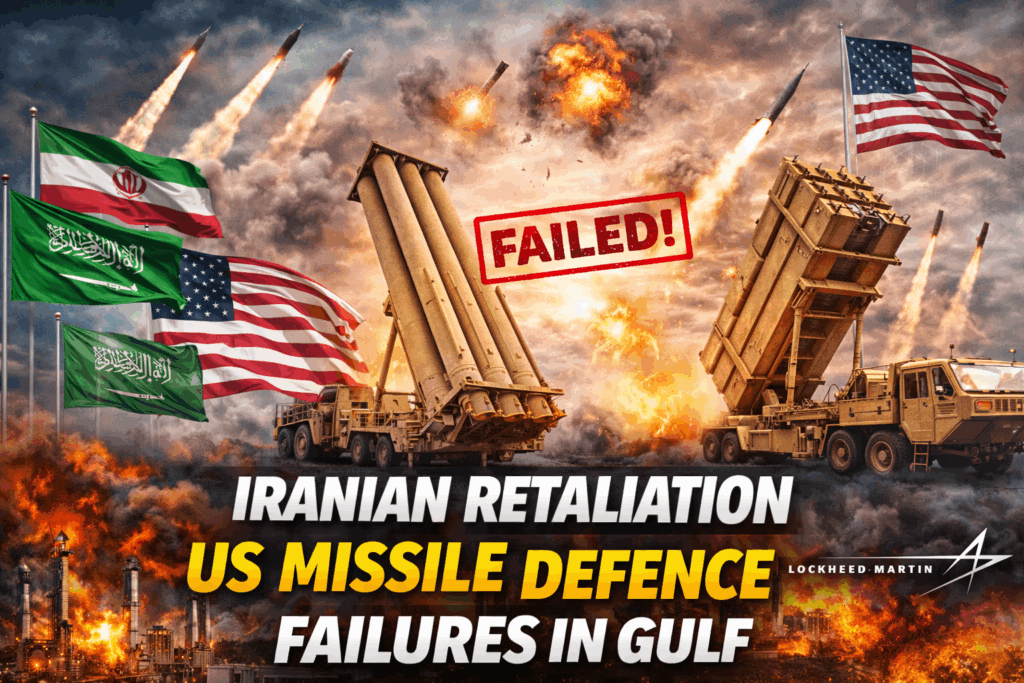
Several Gulf countries have collectively invested around $142 billion in acquiring advanced missile defence systems from the United States, particularly the THAAD (Terminal High Altitude Area Defense) system. The purchases were aimed at strengthening protection against potential aerial threats in the region.
However, recent discussions have raised questions about the effectiveness of these defence systems. Critics argue that despite the massive investment, the system may not always provide complete protection against all types of missile or drone attacks.
Security analysts note that while THAAD is designed to intercept incoming ballistic missiles at high altitudes, evolving warfare technologies and tactics can pose new challenges. This has led to debates about the reliability and cost-effectiveness of such high-value defence deals.
Supporters, on the other hand, maintain that systems like THAAD remain a critical part of national defence strategies and significantly enhance security capabilities, even if no system can guarantee 100% protection.
The issue has sparked wider conversations about defence spending, strategic partnerships, and the future of missile defence in the Gulf region.


