


BEIJING’S SHIFT: XI JINPING WARNS AGAINST ‘LAW OF THE JUNGLE’ AS U.S. BLOCKADE THREATENS CHINESE ENERGY
BEIJING – After weeks of calculated “strategic ambiguity,” China has officially broken its silence on the escalating conflict in Iran. In a series of sharp diplomatic rebukes and a direct address from President Xi Jinping, Beijing has moved from a cautious observer to a vocal critic of what it calls “dangerous and irresponsible” military maneuvers in the Persian Gulf.[1][2]
The shift marks a critical turning point in the conflict, as China’s core economic interests—primarily its energy lifeline—come under direct threat from a deepening U.S. naval blockade.
The ‘Law of the Jungle’ Warning
In his first public remarks on the war since hostilities began in February, President Xi Jinping warned that the global order is slipping into “disarray.” Speaking during a high-profile meeting in Beijing, Xi stated that the international community must not allow a return to the “law of the jungle,” a pointed critique of the U.S.-Israeli military operations that have targeted Iranian infrastructure and leadership.
The remarks were echoed by the Chinese Foreign Ministry, which issued a scathing condemnation of the U.S. naval blockade of Iranian ports.[2][3] Ministry spokesperson Mao Ning labeled the blockade a violation of international law that “adds fuel to the flame” and jeopardizes the fragile two-week ceasefire recently brokered by Pakistan.
Why Now? The Economic Breaking Point
For the first month of the conflict, China maintained a “measured” silence, working largely through backchannels and providing humanitarian aid. Analysts suggest this was a tactical effort to avoid direct confrontation with Washington ahead of a planned summit with U.S. President Donald Trump.[3]
However, three key factors have forced Beijing’s hand:
-
Energy Security: China is the world’s largest buyer of Iranian oil, purchasing roughly 90% of Iran’s exports. The U.S. blockade has transformed a regional war into a direct challenge to China’s industrial stability.[2]
-
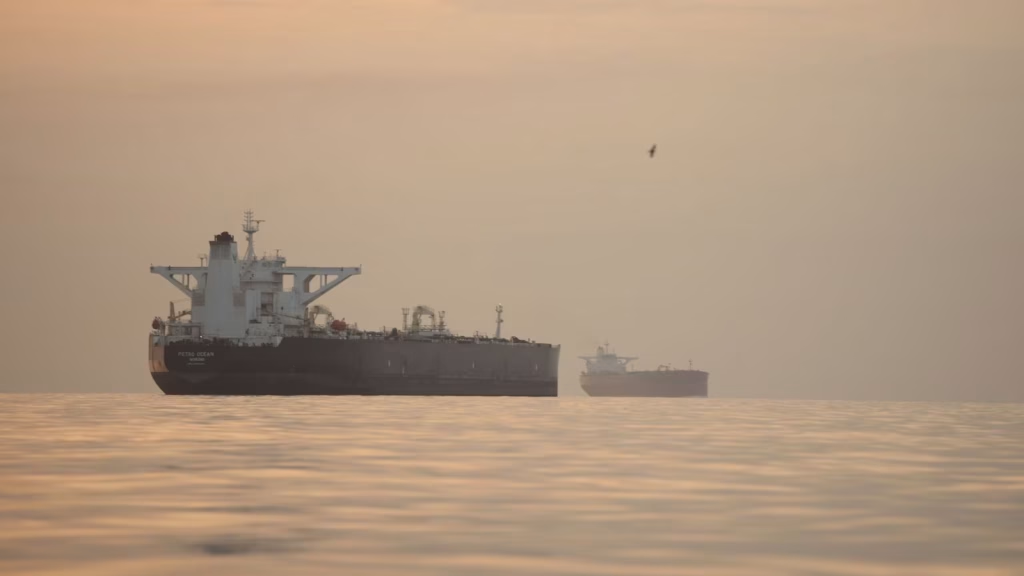
The Strait of Hormuz: As a strategic chokepoint for nearly a fifth of global oil consumption, the closure of the Strait of Hormuz—and the U.S. attempt to forcibly reopen it—places Chinese-flagged vessels at risk of interception.[1]
-
Infrastructure at Risk: Over $6.5 billion in Chinese-built infrastructure across the Middle East, including ports and power plants in Oman and the UAE, is now within the “spillover zone” of the conflict.[1]
Mediation and the ‘Five-Point’ Plan
Beijing is now positioning itself as the primary “voice of reason” on the global stage. Working closely with Pakistan, China has proposed a Five-Point Peace Initiative.[3][4][5][6] The plan calls for:
-
An immediate and permanent ceasefire.
-
The cessation of all “political assassinations” and regime-change efforts.
-
The lifting of the naval blockade to ensure freedom of navigation.
-
Unrestricted humanitarian access to Iranian civilian areas.[4]
-
Respect for the territorial integrity of all Gulf states.[7]
The Road Ahead
While China has significantly sharpened its rhetoric, it remains militarily cautious.[2] Beijing has steered clear of sending lethal aid to Tehran—denying U.S. intelligence claims of missile transfers—to avoid triggering massive tariffs.[1]
As the war enters its next phase, China’s message is clear: while it seeks to avoid a direct military entanglement, it will no longer remain silent while its economic lifelines are severed.[2] The upcoming Beijing summit between Xi and Trump now stands as the most anticipated diplomatic event of the decade, with the stability of the global energy market hanging in the balance.


